
Author name: Admin Anita

Canada Workers Benefit (CWB)

Formerly known as Working Income Tax Benefit The Canada Workers Benefit (CWB) is a refundable tax credit to help individuals and families who are working and earning a low income. The CWB has two parts: a basic amount and a disability supplement. You can claim the CWB when you file your income tax return.   Claiming the disability supplement If you have an eligible spouse and one of you is eligible for the disability tax credit, that person should claim both the basic amount and the disability supplement. If you have an eligible spouse and both of you are eligible for the disability tax credit, only one of you can claim the basic amount. However, each of you must claim the disability supplement on a separate Schedule 6. Who is Eligible How to Claim You may claim CWB and ACWB when you file your tax return. If filing electronically; follow the instructions of the software and answer the appropriate questions accurately. If filing a paper return; complete Schedule 6 and attach it with the paper return.

Canada Carbon Rebate (CCR) – for Individuals

Formerly known as Climate Action Incentive Payment (CAIP) CCR is a tax-free amount to help eligible individuals and families offset the cost of the federal pollution pricing. It consists of a basic amount and a supplement for residents of small and rural communities. The Canada Carbon Rebate (CCR) includes a 20% supplement for residents of small and rural communities. The supplement applies only to residents of Alberta, Saskatchewan, Manitoba, Ontario, Newfoundland and Labrador, New Brunswick and Nova Scotia whose primary residence is outside a Census Metropolitan Area (CMA), and they expect to continue to reside outside the same CMA on April 1, 2024.   What is CMA Who is Eligible  Family income does not affect your payment amount The CCR is not subject to a reduction based on income.

Tax Deductions versus Tax Credits

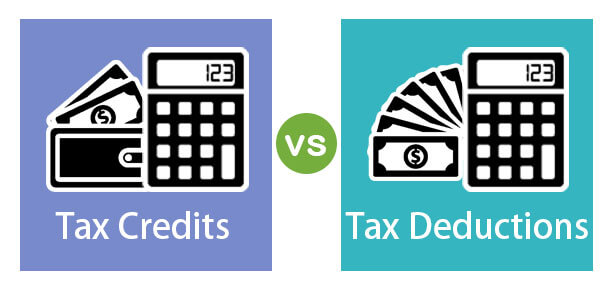
Tax Deductions versus Tax Credits Both can be claimed by Taxpayers to reduce their tax liability – however they work in different ways.  Deductions reduce the taxable income resulting in reduced taxes based on the tax brackets. Tax Credits are calculated based on one’s personal situation.  Once tax is calculated – these credits are applied to reduce taxes.  Total the Non-refundable Tax Credits  and 15% credit is applied to reduce tax payable.  Refundable Tax Credits are credits that are allowed to taxpayers even if they are not taxable.    To summarize, Tax Deductions reduce Taxable Income and Tax Credits reduce Tax Payable. Example of Tax Deductions: John Doe has a total income of $50,000.  He contributed to RRSP a total of $2,500 and paid $750 as Professional Dues.  So his net income is $46,750 after deducting a total of $3,250 (total of RRSP and Dues).   John received Workers Compensation Benefit of $2,000.  Since this is income – it is included in Total and Net Income.  However, since it is non-taxable income; it must be deducted to calculate Taxable Income – $44,750. So Tax Deductions reduce Taxable Income from $50,000 to $44,750. Example of Tax Credits: John’s basic personal amount is $15,000 and Canada employment amount is $1,368 = total $16,368.  Non-refundable Tax Credit is calculated at 15%; therefore, non-refundable tax credit is $2,455.20.   His tax payable is $44750 at 15% = $6,712.50.  He can reduce his tax payable by non-refundable tax credits and his tax payable is now calculated at $4,257.30 So Tax Credits reduce Tax Payable from $6,712.50 to $4,257.30 Example of Refundable Tax Credit is Educator Credit or Refundable Medical Credit – These reduce tax payable or increase refund even if a taxpayer is not taxable.    

Scroll to Top